
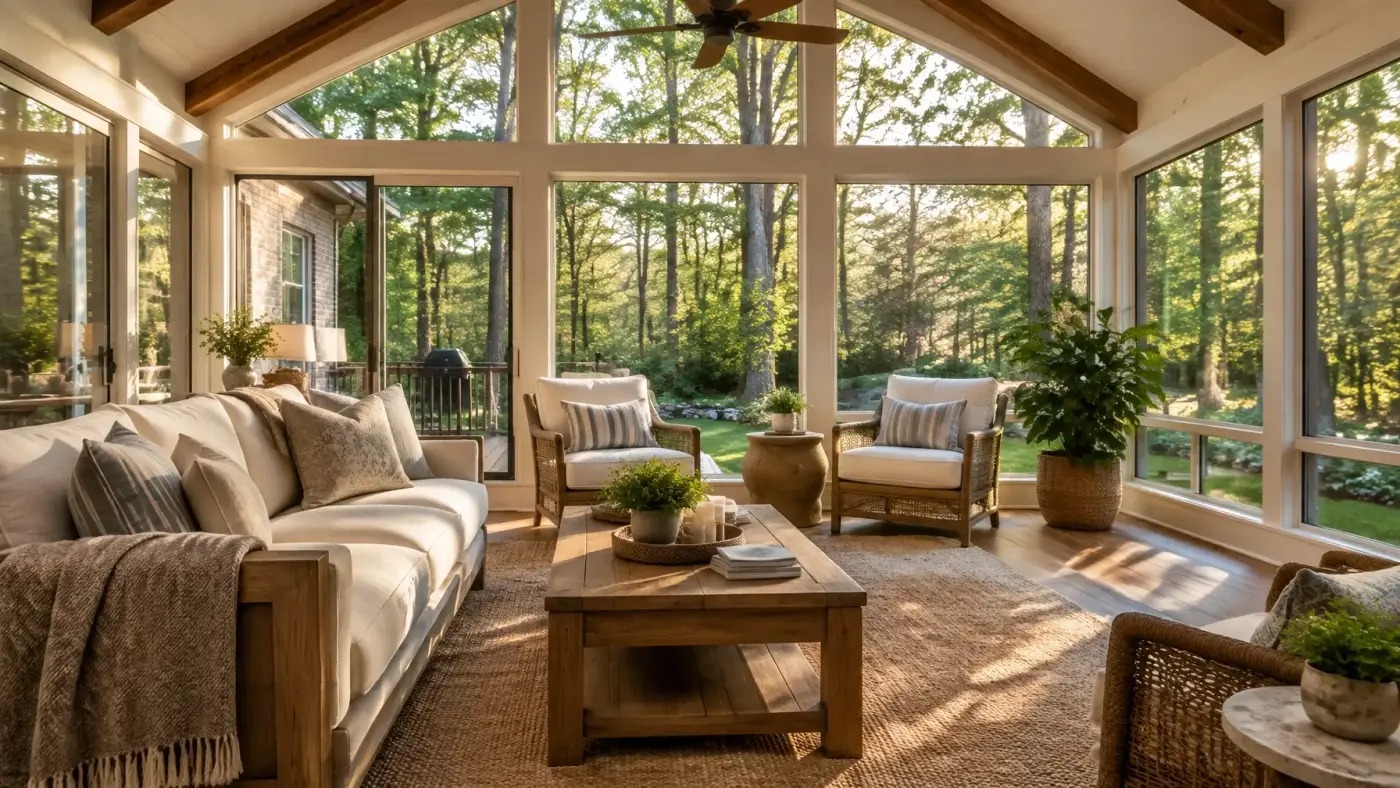
A sunroom can change the way a home feels without the cost or commitment of a major full-room addition. For homeowners in Hickory, Lenoir, Morganton, and the surrounding foothills, a well-planned three-season sunroom creates a comfortable in-between space: bright enough for morning coffee, sheltered enough for a rainy afternoon, and connected to the outdoors in every season.
Make natural light do the work
The defining feature of a sunroom is, of course, its view. Large windows, sliding glass doors, and carefully placed glass walls make a modest footprint feel generous. Instead of filling every wall with openings, think about what you want to see from the room. A wide view toward the garden or a stand of trees can be more valuable than glass in every direction.
Energy-efficient glazing makes that openness more comfortable. Look for double-pane windows with low-emissivity coatings and insulated frames. These details help reduce heat gain in summer and keep warmth inside on crisp winter mornings. In our changing North Carolina seasons, the right glass is less about a specification on a label and more about being able to enjoy the room without constantly adjusting the thermostat.
Choose finishes that can handle the in-between
A three-season room lives between interior and exterior conditions, so materials need to be forgiving. Weather-resistant composite trim, sealed wood accents, durable paint, and moisture-tolerant upholstery all make maintenance easier. Flooring deserves special attention. Porcelain tile, luxury vinyl, and well-sealed concrete handle temperature swings and tracked-in moisture better than delicate materials, while a washable area rug can add softness when the room is used as a sitting area.
Insulation is still important, even if the room is not designed to be conditioned like the rest of the house. Insulated roof panels, properly sealed transitions, and thoughtful wall construction slow down temperature swings. Ventilation matters too: operable windows, ceiling fans, or screened openings can move warm air out when a summer afternoon settles in.
Design for more than one season
The most useful sunrooms are flexible. A compact table can serve as a breakfast spot, homework station, or place to sort garden starts. Built-in benches provide seating without crowding the room, and modular chairs can be rearranged when friends visit. Plan electrical outlets where lamps, fans, or a small desk might eventually live so the room can evolve with your household.
Bright neutral palettes keep the focus on the view. Warm white walls, pale oak, woven textures, and a few leafy plants create an indoor-outdoor cue without making the room feel themed. Carrying a flooring color or trim detail from the existing house also helps the addition feel considered rather than attached.
A brighter kind of home improvement
A sunroom adds everyday enjoyment and can strengthen the appeal of a home when it is designed as a natural extension of the original architecture. Start with how you want to use the space, then work backward through light, ventilation, materials, and budget. A thoughtful plan turns a sunny edge of the house into a place you will actually use—not just a pretty view from the hallway.