
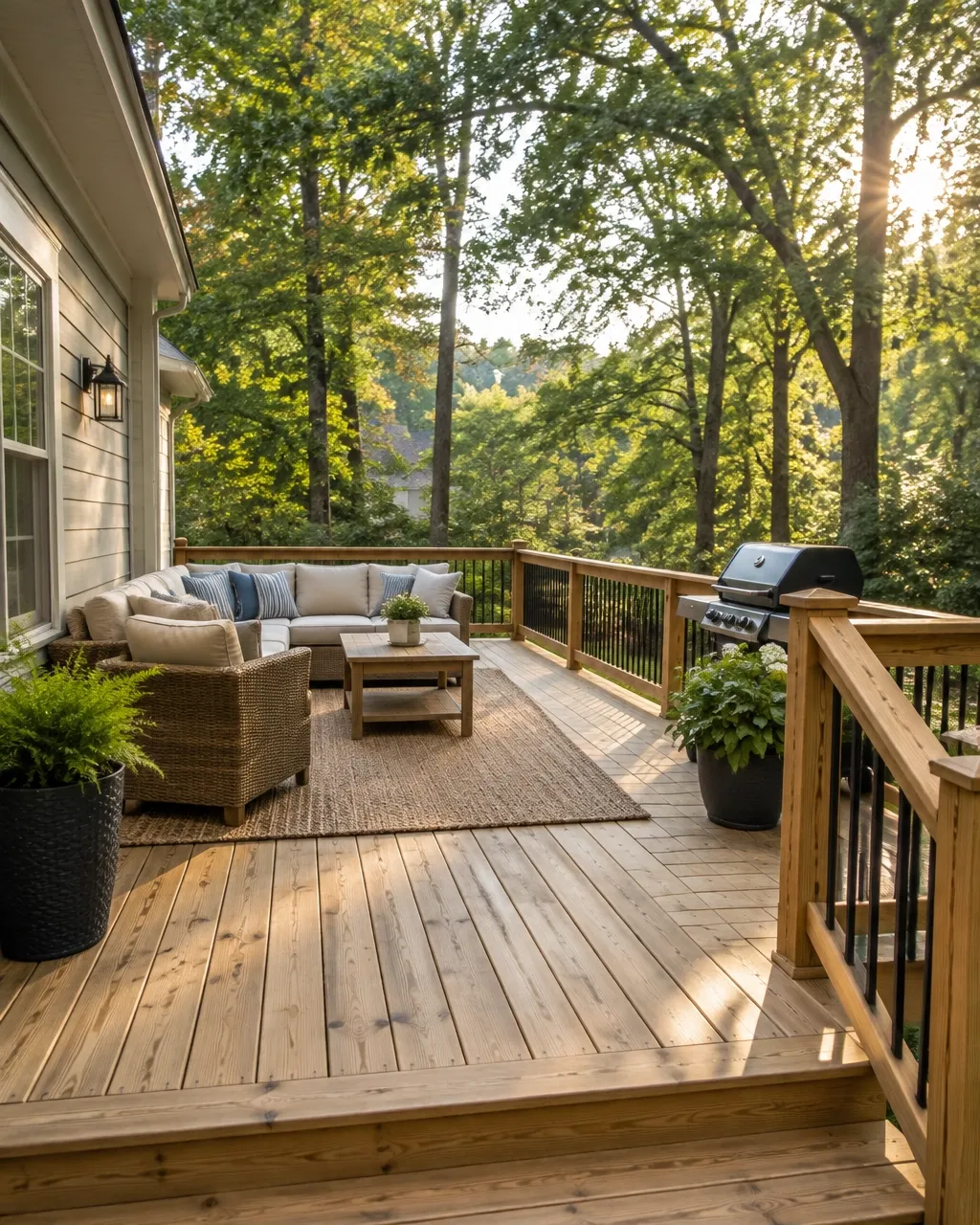
Outdoor living does not have to begin with the biggest possible deck. A well-designed platform, porch, or landing can make a backyard feel like an extra room while keeping the project focused. For homes around Hickory, Lenoir, Morganton, and the Catawba Valley, the best budget is one that goes toward the parts you will use every week: a comfortable place to sit, a clear route outside, and materials that can handle sun and rain.
Start with the shape that fits your life
A simple rectangular deck is often the most economical because it uses straightforward framing and creates fewer difficult corners. If your yard has a slope, a small multi-level configuration can follow the grade and create separate areas for dining and lounging without building one enormous platform. A compact wrap-around porch can add useful shade and a welcoming transition at the front or side of the house, especially when it connects two frequently used doors.
Think through furniture before finalizing dimensions. Mark the footprint of a table, grill, and walking path with painter’s tape or garden stakes. This quick exercise can reveal whether the space needs more width, a better door location, or simply less furniture. Right-sizing the plan is one of the most effective ways to protect the budget.
Spend wisely on materials and maintenance
Pressure-treated lumber remains a practical choice for many decks, particularly when the design is simple and the finish is maintained. Composite decking costs more up front but can reduce future staining and upkeep. Compare warranties, heat under direct sun, slip resistance, and the availability of replacement boards—not just the price per square foot.
For wood, allow the surface to dry according to the manufacturer’s guidance before applying a penetrating stain or water-repellent finish. A quality finish, clean gutters, and regular sweeping help protect boards from moisture and pollen. Paying attention to fasteners, flashing, footings, and drainage is even more important than upgrading the decking color; the structure beneath the surface is where long-term value begins.
Make a porch feel finished
An open porch can stay budget-friendly with a simple roofline, durable columns, and a ceiling fan that keeps air moving. If insects or evening use are concerns, screening the enclosure can deliver a lot of comfort without the complexity of a fully conditioned room. Keep the palette connected to the house with one or two exterior colors, then bring in personality through cushions, rugs, and planters.
Use small upgrades for a big change
Low-voltage step lights and warm string lights can extend the evening without a major electrical overhaul. A built-in bench can double as storage, while a slim deck box protects cushions and garden tools. Replacing tired railings, adding large planters, or installing a shade sail are approachable improvements that can change the feeling of an existing deck quickly.
Outdoor upgrades earn their value twice: they make home more enjoyable now and give future buyers a reason to linger. Start with a durable, useful foundation and add the comforts in stages. When the plan, structure, and details work together, a modest backyard project can become one of the most lived-in parts of the home.